


Are you about to buy a car for your self-employed business? Then you'll inevitably run into the question that comes up on every tax forum and in every accountant's office: how much of that company car is tax deductible?
Since the law of 18 December 2025 (published in the Belgian Official Gazette on 30 December 2025), updated rules apply, so it's important to work from the most recent state of affairs. There's no simple percentage per car — rather, a deduction rate per decision you make. Your legal structure, your fuel choice and the year of purchase together determine the picture. This article explains in five minutes how the system looks today, and what advice follows from it.
The basic principle: deductibility depends on legal structure, fuel and purchase year
For passenger cars with CO2 emissions that you buy, lease or rent, the starting point is that there is in principle no longer any tax deduction. There is one important exception to that principle: the plug-in hybrid (PHEV), and only for sole traders. A separate, more favorable regime applies to 100% electric cars. Which situation applies to you therefore depends on three questions: are you buying as a sole trader or through a company, are you choosing electric, plug-in hybrid or a conventional fuel, and in which year do you sign the contract?
Sole trader or company: decisive for your deduction
This distinction carries more weight than most people expect.
Through a company, a new car with CO2 emissions is in principle not deductible, including a plug-in hybrid. The tax logic therefore pushes companies toward 100% electric. If a company director or employee drives the car privately, the benefit in kind (BIK) is added on top.
As a sole trader (personal income tax), you have a bit more room: a separate, more favorable regime applies to plug-in hybrids. There's also no separate benefit-in-kind levy "on yourself" — the exercise here mainly revolves around business use and the CO2 status of the car.
In short: as a sole trader, a plug-in hybrid gives you a bit more tax room than a company would get, but an electric car remains more attractive. Through a company, only an electric car has a tax-favorable regime.
Electric: the most predictable path
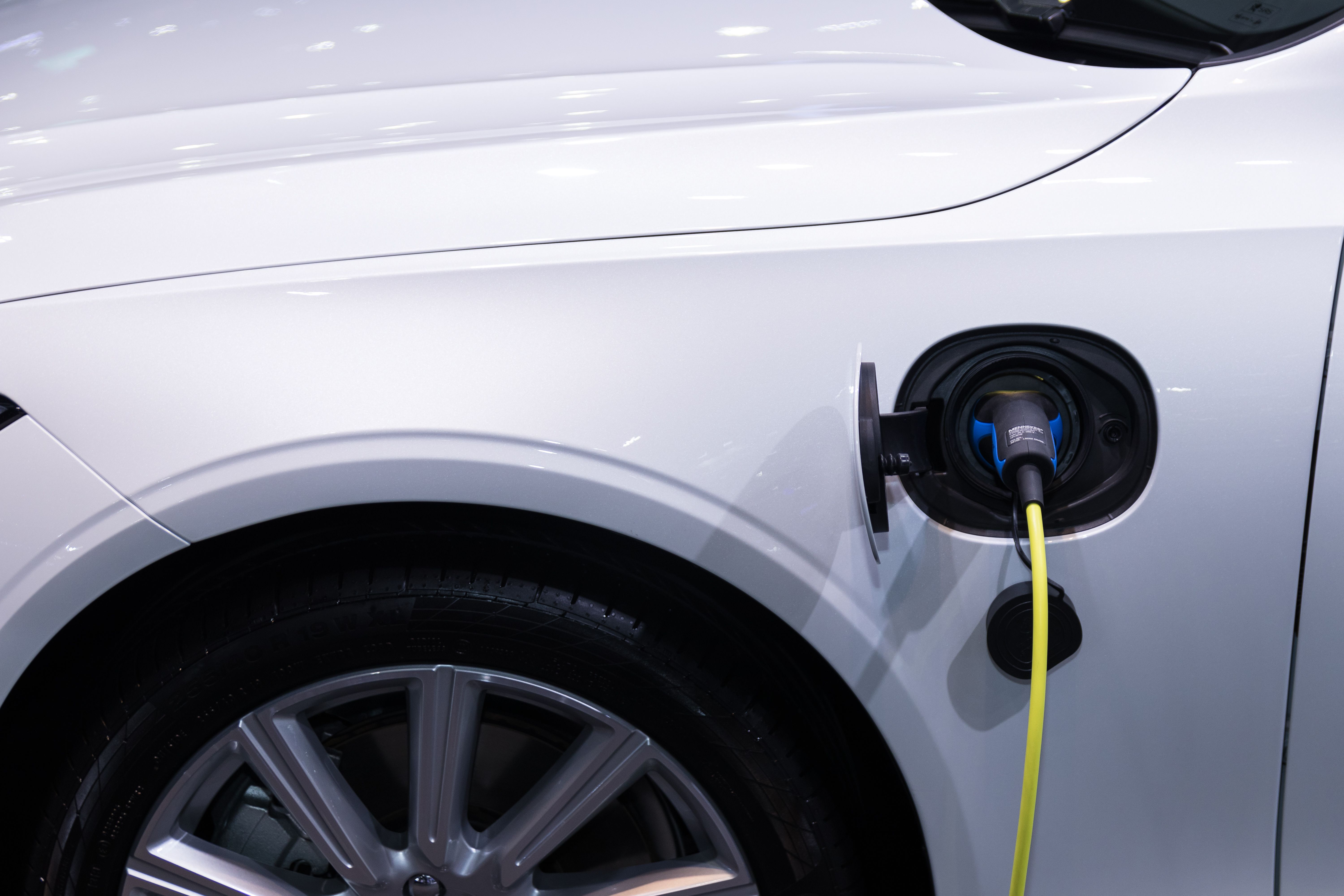
100% electric cars remain the simplest story. The purchase year — the year in which the car's order form is signed — determines the percentage for the entire usage period or contract term:
| Purchase/lease year | Deduction rate |
|---|---|
| 2026 | 100% |
| 2027 | 95% |
| 2028 | 90% |
| 2029 | 82.5% |
| 2030 | 75% |
| From 2031 | 67.5% |
This phase-down path applies to both sole traders and companies, and is set by law. The earlier you buy, the higher and longer the percentage you lock in.
Plug-in hybrid: three buckets, three percentages
For a plug-in hybrid there isn't a single deduction rate — costs are split into three categories, each with its own treatment (and only relevant for sole traders):
- Fuel costs: 0% deductible
- Electricity costs: follow the same percentage as a 100% electric car
- Other car costs (depreciation, maintenance, insurance, financing): capped according to purchase year
The following cap applies to that last category:
| Purchase year | Max. deduction other car costs | If CO2 ≤ 50 g/km |
|---|---|---|
| 2026 | 75% | up to 100% |
| 2027 | 75% | up to 95% |
| 2028 | 65% | — |
| 2029 | 57.5% | — |
| From 2030 | 0% | — |
A very fuel-efficient plug-in hybrid (emissions up to 50 g/km) bought in 2026 can therefore reach up to 100% deduction for those "other costs", but fuel costs always stay at 0%.
And VAT?
In Belgium, VAT operates independently of income tax. For VAT on a company car, a cap of maximum 50% applies, to be determined via one of three methods:
- Trip logging: keeping a record of actual business use
- Semi-flat-rate method, calculated based on your home-to-work distance
- General flat rate of 35%, the simplest method, with no logging obligation
Practical advice for your purchase
- Going 100% electric? The earlier you buy or sign your contract, the higher the percentage you lock in for the entire contract term.
- Considering a plug-in hybrid as a sole trader? Work out the fuel, electricity and other costs separately — a "fully deductible" sales pitch rarely holds up for the whole picture.
- Buying through a company? Electric is de facto the only tax-attractive route for a new car.
This article reflects the general tax logic based on the regulations in force at the time of writing. Tax matters are highly situation-specific: if you want to know exactly what tax treatment applies to your specific case, contact your accountant or tax advisor.